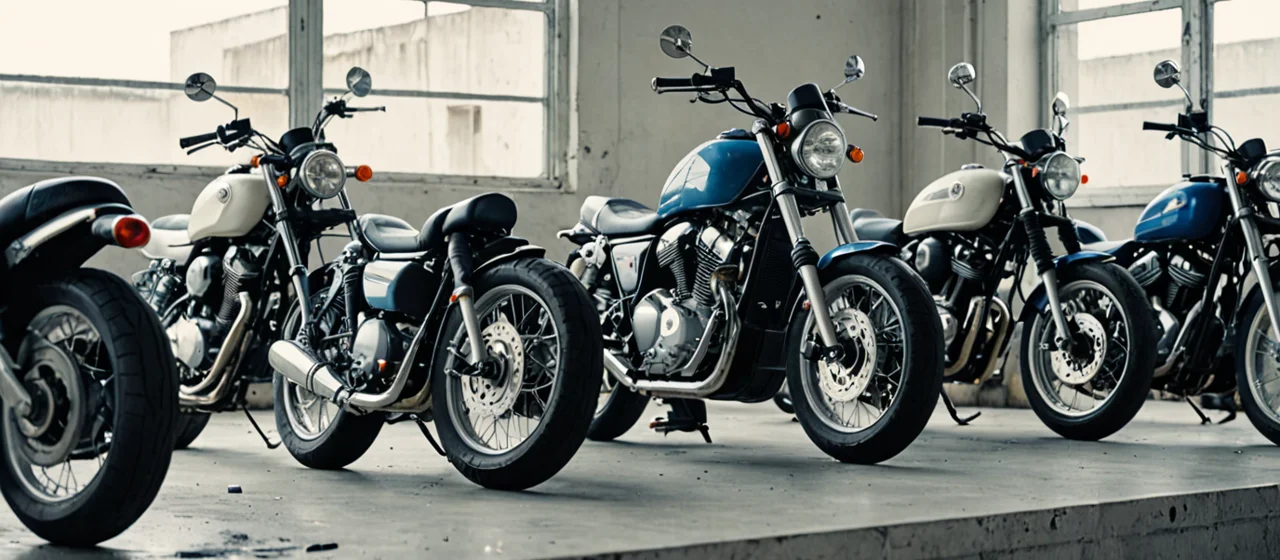
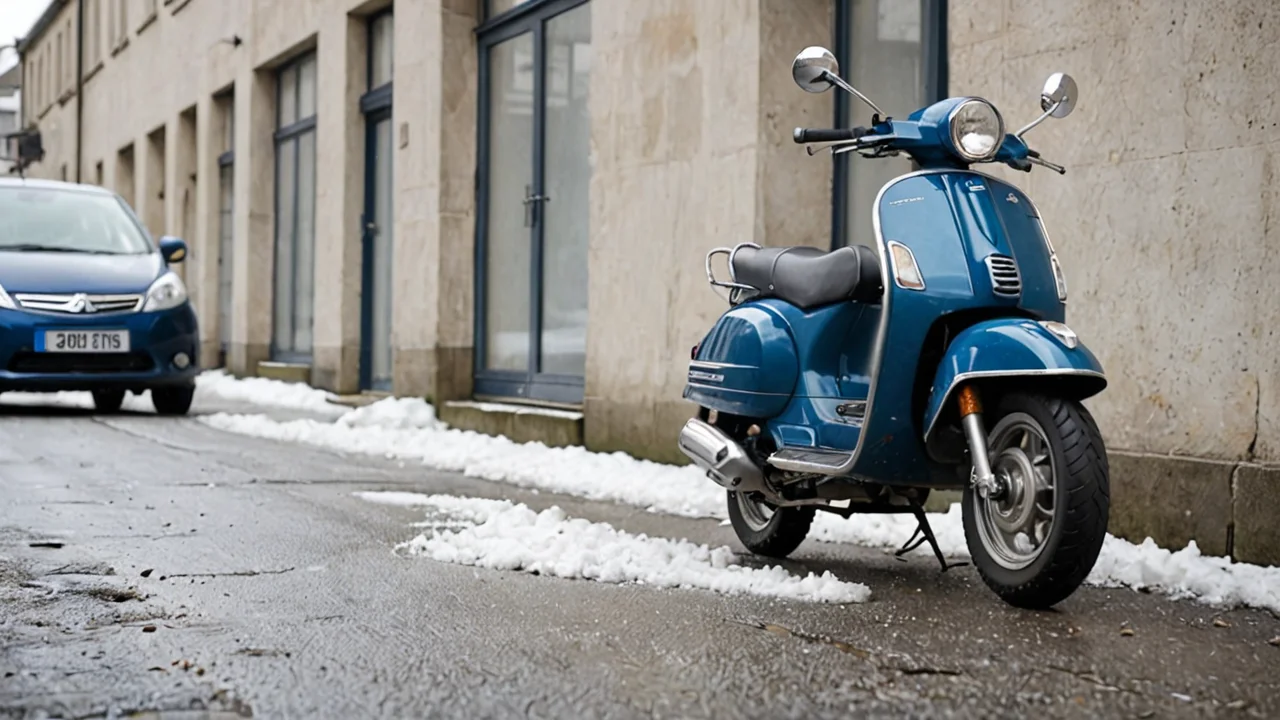
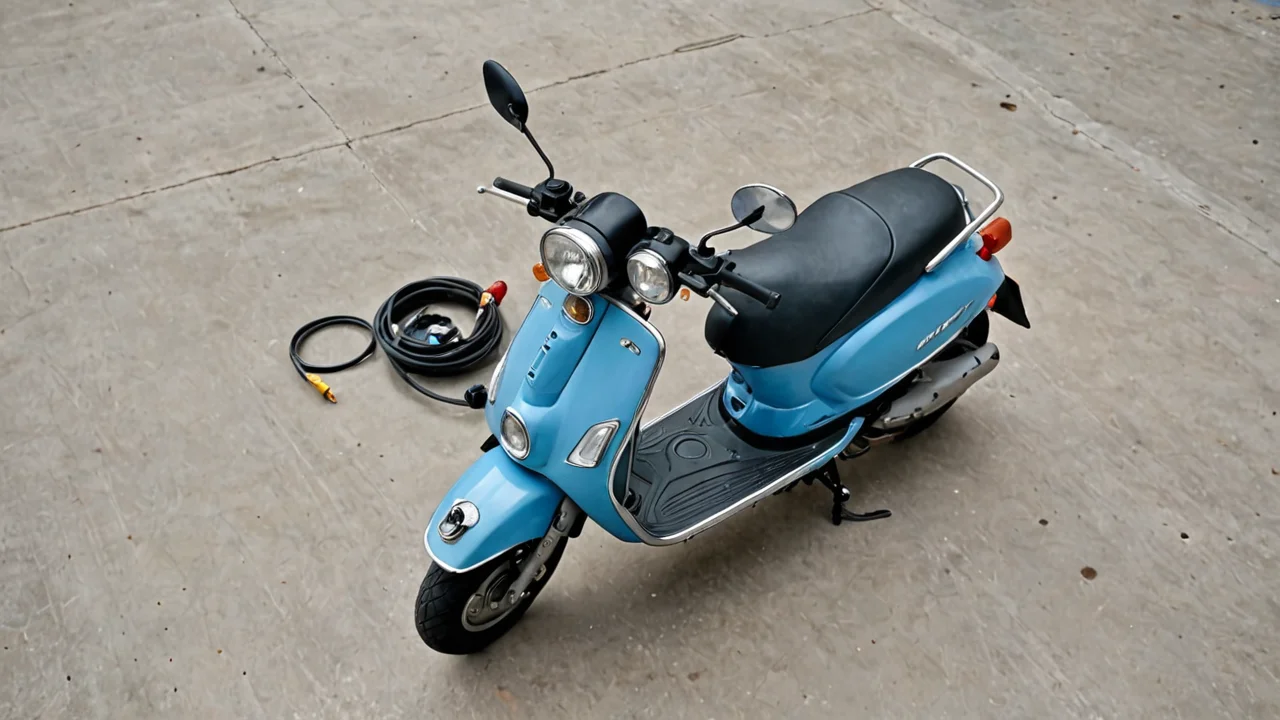
Maintenance on a motorcycle or scooter is mostly a schedule and a set of checks, not mechanical talent. The work divides into three tiers: daily or pre-ride inspection you do in two minutes, periodic service at fixed mileage or time intervals, and seasonal storage and revival. Tires, chain or belt, brakes, oil, coolant, and battery cover the overwhelming majority of what actually strands riders, and each has a failure signature you can learn to recognize before it leaves you on the shoulder. The rest of this page is about how those tiers fit together, what each choice costs, and where the honest trade-offs sit.
What a pre-ride check actually catches, and what it doesn't
A two-minute walk-around catches the failures that happen between services: a tire going soft from a slow puncture, a chain that has stretched past its adjustment window, a brake lever that has gone spongy, a puddle of coolant or fork oil under the machine. It does not catch internal wear, and it will not tell you your brake fluid has absorbed enough moisture to boil under hard use. Those need the calendar-based service, not the daily glance.
The sequence matters more than the thoroughness. Tires first, because a soft tire changes everything about how the bike steers and stops, and you want to know that before you judge anything else. Check pressure cold, with a gauge you trust — the one on a gas station airline is often off by enough to matter. Then look at the tread and sidewalls for cracking, embedded debris, and the wear bars. Move to the controls: front brake lever feel, rear brake pedal travel, clutch or throttle free play. Then lights and horn, because a dead brake light is a safety failure and a five-second check. Chain or belt tension and lubrication come next, then a look under the machine for drips. Finally, the fasteners you can reach — axle nuts, mirror stalks, luggage mounts.
What this routine will not do is substitute for a torque wrench on critical fasteners or for measuring brake pad thickness with anything other than your eyes. Pads wear slowly enough that eyeballing them once a week is fine; if you are down to a sliver of friction material, the lever will still feel normal right up until the backing plate contacts the rotor. That is the limit of the walk-around: it catches sudden changes, not gradual ones. The gradual ones belong to the service interval, and skipping the daily check to "save time" is a false economy — the slow puncture you find in your driveway is a tire you replace on your schedule, not on the shoulder of a highway.
Oil, filters, and the interval question
Follow the manufacturer's interval in the owner's manual, measured in both miles and months, and use whichever comes first. Oil degrades with heat cycles and contamination as well as distance, so a bike that sits for months between short trips needs its oil changed on the calendar even if the odometer barely moved. The manual interval is the one number the engineers who built the engine actually signed off on; anything a forum tells you about stretching it is a bet against the people who designed the thing.
The oil change itself is a filter change too. Replacing oil without the filter leaves a loaded filter element to bypass or restrict flow, which defeats the point. On most machines this is a drain plug, a filter, a crush washer, and a torque spec — and the torque spec is the part people get wrong, because overtightening a drain plug strips the threads in the sump and turns a twenty-minute job into an engine-out repair. Use a torque wrench. The crush washer is a one-time part; reuse it and you get a weep.
What you are buying with a shorter-than-necessary interval is margin. What you are buying with a longer one is a small saving now and a larger risk later. The honest trade-off is that frequent oil changes are cheap insurance and slightly wasteful; infrequent ones are a gamble on how the previous owner treated the machine and how hard you ride it. Short-trip commuting, dusty conditions, and lots of cold starts all push toward the shorter end of whatever the manual allows. Track riding and sustained high load push the same direction. There is no figure that makes stretching the interval smart — the manual already accounts for normal use, and "normal" is doing a lot of work in that sentence.
Chains, belts, and the cost of neglect
A chain that is cleaned, lubricated, and adjusted on schedule will outlast one that is merely lubricated, and both will outlast a neglected chain by a wide margin. The failure mode is predictable: the chain stretches unevenly, the sprockets wear into hooks, and eventually a link fails or the chain jumps the sprocket under load. You notice it first as a tight spot when you spin the rear wheel, then as a whirring or clicking under acceleration, then as a chain that needs adjustment every few rides. By the time it needs adjusting that often, the sprockets are usually done too — and a chain-and-sprocket set costs several times what a chain alone does.
Clean with a dedicated chain cleaner and a brush, not a pressure washer aimed at the links, which drives water past the O-rings. Lubricate with a chain-specific product after the chain is dry and while it is still slightly warm, so the lubricant creeps into the rollers. Check tension at the tightest point of the run, with the bike on its sidestand or centerstand as the manual specifies — the two methods give different numbers and mixing them up is how people run chains too tight, which loads the countershaft bearing and the rear wheel bearings.
Belts are the quiet alternative on scooters and some touring bikes. They do not need lubrication, they run clean, and they last a long time — but they fail without much warning, and a replacement belt plus the labor to get at it usually costs more than a chain service. Shaft drive is the third option: essentially maintenance-free apart from periodic fluid changes, but heavy and expensive to repair when it does go wrong. The choice among the three was made by the manufacturer; your job is to service whatever you got. The one thing that applies to all of them is that a driveline failure at speed is among the least pleasant things that can happen on two wheels, and every one of these systems telegraphs its condition well before it lets go.
Brakes, tires, and fluid: the safety-critical items
Brake pads and tires are the two wear items where the consequence of running them to the limit is not inconvenience but a crash. Check pad thickness regularly; replace pads before the friction material is gone, and replace them in matched sets per caliper. When you fit new pads, bed them in with a series of moderate stops before you need them in anger — new pads on old, glazed rotors stop poorly until they seat.
Brake fluid is the item most often ignored because it looks fine. It is hygroscopic: it absorbs moisture from the air over time, and wet fluid boils at a lower temperature, which shows up as a lever that goes long or to the bar during hard, repeated braking. That is a genuine failure, not a feel issue. Flush it on the interval in the manual, which is typically specified in years rather than miles. The same logic applies to coolant on a liquid-cooled machine: it degrades, it loses its corrosion inhibitors, and it should be changed on schedule rather than topped up indefinitely.
Tires deserve their own paragraph because they are the only contact with the road. Replace them when the tread is worn to the wear bars or when the sidewalls show cracking, whichever comes first, and pay attention to the date code on the sidewall if you are buying used or the bike has sat. A tire that looks like it has tread but is years old has hardened rubber and reduced grip. Tire pressure is the single highest-return maintenance item on any bike: it affects grip, wear, fuel economy, and steering, costs nothing to check, and is wrong more often than riders admit.
Batteries, charging, and seasonal storage
Most batteries that fail did not wear out — they were discharged and left that way. Lead-acid and lithium both suffer from being stored at low state of charge, and a bike that sits for weeks with a parasitic drain will not start when you want it. The fix is a maintainer, not a charger: a smart tender that brings the battery to full and holds it there without overcharging. Fit a permanent pigtail so you can plug in without removing bodywork, and use it every time the bike will sit longer than a couple of weeks.
Seasonal storage is where good intentions go wrong. The sequence that works: change the oil before storage rather than after, so the engine sits with clean oil and fewer corrosive byproducts; fill the tank to reduce the airspace and condensation, and add a fuel stabilizer if the bike will sit for months; clean and lubricate the chain; inflate the tires to the pressure in the manual and, ideally, get the weight off them or move the bike periodically so they do not flat-spot; disconnect or tender the battery. Plug exhaust and airbox openings if rodents are a real risk where you store it — chewed wiring is a surprisingly common spring surprise.
Revival in spring is the reverse: check the battery first, then tire pressures, then fluids and for leaks, then the controls. Do not start the engine and immediately ride hard. Give it a few minutes of gentle running and a low-speed check of the brakes before you trust them. The cost of all this is an afternoon twice a year and a modest outlay on a tender and stabilizer. The cost of skipping it is a no-start, a flat-spotted tire, or a fuel system that needs cleaning — all of which cost more than the supplies did.
When to do it yourself, when to pay someone, and how to tell
Do the inspection, the chain, the oil and filter, the battery tending, and the tire pressures yourself. These are low-risk, high-frequency jobs where the main requirement is doing them at all. Pay a shop for brake fluid flushes, valve clearance checks, suspension work, tire mounting and balancing, and anything that requires a torque sequence you do not have the spec for. The dividing line is not difficulty — it is consequence. A mistake on a chain adjustment costs a chain; a mistake on a brake caliper bolt costs a crash.
For riders on electric bicycles and scooters, the maintenance picture shifts but does not disappear. Under the federal definition, a low-speed electric bicycle is a two- or three-wheeled vehicle with fully operable pedals and an electric motor of less than 750 watts, whose maximum speed on a paved level surface when powered solely by the motor while ridden by a 170-pound operator is less than 20 mph. The class system layered on top of that baseline — Class 1 assisting only while pedaling up to 20 mph, Class 2 with a throttle up to 20 mph, Class 3 assisting up to 28 mph and often subject to extra age and helmet rules — matters for maintenance mainly because higher assist speeds and motor loads put more heat and wear through brakes, tires, and drivetrain. The mechanical checks are the same; the intervals can be shorter on a machine that spends more time under motor load.
Whatever you ride, keep a simple log: date, odometer, what you did. It takes a minute and it turns "when did I last change the oil" from a guess into a fact. It also helps at resale, and it makes the shop visit cheaper because you can tell them what has already been done. The trade-off is honest: a log is tedious, and most riders abandon it after a few entries. A note in your phone's calendar recurring on the manual's interval does the same job with less discipline required.
The last thing worth saying is about the failure signature of deferred maintenance. It rarely announces itself as a breakdown. It shows up as a bike that feels slightly vague in corners, a lever with more travel than it used to have, a chain that needs adjusting more often, a battery that cranks a little slower on cold mornings. Riders who learn to notice those small changes spend far less time on the side of the road than riders who wait for something to break. Maintenance is not about preventing every failure; it is about moving the failures you cannot prevent to a time and place you choose.