
The first decision is legal, not mechanical: what you can legally ride where you live depends on the motor, the throttle, and the top speed far more than on the frame shape or the badge on the downtube. Get that wrong and you can end up with a machine that is a bicycle on your street and a motor vehicle at the county line. Settle the category first, then the ergonomics, then the money.
What actually defines a scooter, and why the line matters more than the shape
There is no single legal category called "scooter." What you are buying falls into one of several buckets, and the bucket determines whether you need a license, insurance, registration, a helmet, or none of those things. The bucket also determines what happens after a crash and who pays.
The most consequential line for most buyers sits between electric bicycles and motor vehicles. Under the U.S. Consumer Product Safety Act, a low-speed electric bicycle is a two- or three-wheeled vehicle with fully operable pedals and an electric motor of less than 750 watts, whose maximum speed on a paved level surface when powered solely by the motor while ridden by a 170-pound operator is less than 20 mph. Those numbers are not marketing copy; they come from the federal definition as it stood in 2002, and they set the floor that state law builds on. The federal definition caps motor-only speed at 20 mph and continuous rated motor power at 750 watts. The Consumer Product Safety Act language phrases the speed limit as less than 20 mph on a paved level surface under motor power alone, tested at a 170-pound rider weight. Note that "less than" and "20 mph" are doing real work here, and that the rider weight is written into the statute, which tells you something about how seriously the drafters took the test conditions.
Above those limits, or without pedals, products may be treated as motor vehicles requiring licensing and registration under state law. That is the cliff. A machine that is 20 mph and 749 watts with working pedals is a bicycle in most states. The same frame with a bigger controller and no pedals is a moped, a motorcycle, or an unregisterable homemade vehicle, depending on the state. Salespeople will tell you the controller is "detuned" or the throttle is "locked." What matters is the machine as delivered and as configured when a police officer or an insurance adjuster looks at it.
The trade-off is real. A legal low-speed e-bike is slower than what you can build or import, and the 20 mph ceiling feels slow on a road with traffic moving at 40. But the legal machine needs no license, no registration, and in many states no insurance, and you can ride it on paths and bike lanes. The fast machine costs you all of that and may cost you your ability to ride it legally at all.
The three e-bike classes and what each one actually costs you
Most U.S. states have adopted a three-class framework built on the federal low-speed electric bicycle baseline, and the class you buy changes your age floor, your helmet rules, and where you can ride. The class system is a state construct, not a federal one; the federal statute defines the outer envelope, and the states subdivide it.
A Class 1 e-bike has a motor of less than 750 watts that provides assistance only when the rider is pedaling and ceases to provide assistance when the bicycle reaches 20 mph. There is typically no minimum operator age at the federal level, and many states mirror that for Class 1. You cannot coast on the throttle, because there is no throttle. You get a natural pedal feel and access to the widest range of paths and trails, since many land managers treat Class 1 as the least intrusive option. The cost is that you must pedal to move, which is fine until you are tired, loaded with groceries, or stopped on a hill.
A Class 2 e-bike has fully operable pedals and a motor of less than 750 watts that can propel the bike solely by motor using a throttle up to 20 mph. The throttle is the whole point and also the whole liability. It makes stop-and-go traffic and hill starts easy, and it makes the bike usable when you are injured or hauling cargo. It also puts you in a category that some trail systems exclude, and it draws more attention from regulators because the motor can move the bike without you. Above 20 mph motor-only, or above 750 watts, the product may be treated as a motor vehicle requiring licensing and registration under state law.
A Class 3 e-bike is defined in many state laws as a bicycle with a motor of less than 750 watts that provides assistance up to 28 mph, usually limited to pedal assist, and often subject to additional age and helmet requirements compared with Class 1 and 2. The extra 8 mph is the difference between feeling like traffic is passing you and feeling like you are part of it. The cost is access: Class 3 machines are commonly barred from paths and trails where Class 1 and 2 are allowed, and the helmet and age rules tighten. If your commute is on a road with a 30 mph speed limit and no shoulder, Class 3 is the class that makes the trip tolerable. If your riding is mostly on a rail trail, Class 3 buys you nothing and costs you access.
| Class | Motor power ceiling | How it assists | Assist cutoff | Typical access cost |
|---|---|---|---|---|
| Class 1 | Less than 750 W | Pedal assist only | 20 mph | Widest trail and path access |
| Class 2 | Less than 750 W | Throttle or pedal assist | 20 mph | Some paths exclude throttle bikes |
| Class 3 | Less than 750 W | Usually pedal assist only | 28 mph | Often barred from paths; extra age and helmet rules |
The honest summary: buy the lowest class that solves your actual problem. Class 3 is not "better" in any absolute sense; it is a different access trade. A rider who buys Class 3 for the speed and then discovers the local trail network bans it has bought the wrong bike, and there is no firmware update that fixes that.
Gas scooter, e-scooter, or e-bike: pick by the trip, not the look
Start with the trip you actually make, not the machine you like looking at. The three families solve different problems, and the wrong one will annoy you daily.
A stand-up electric scooter is for short trips with a place to park it indoors and a rider willing to stand. It folds, it goes in an elevator, and it costs less than a seated machine. It is also the worst choice for a grocery run, a rainy commute, or anything over a few miles, because small wheels and no suspension turn rough pavement into a physical event. If your trip is a train plus a mile at each end, a stand-up scooter is close to ideal. If your trip is a weekly shop, it is the wrong tool.
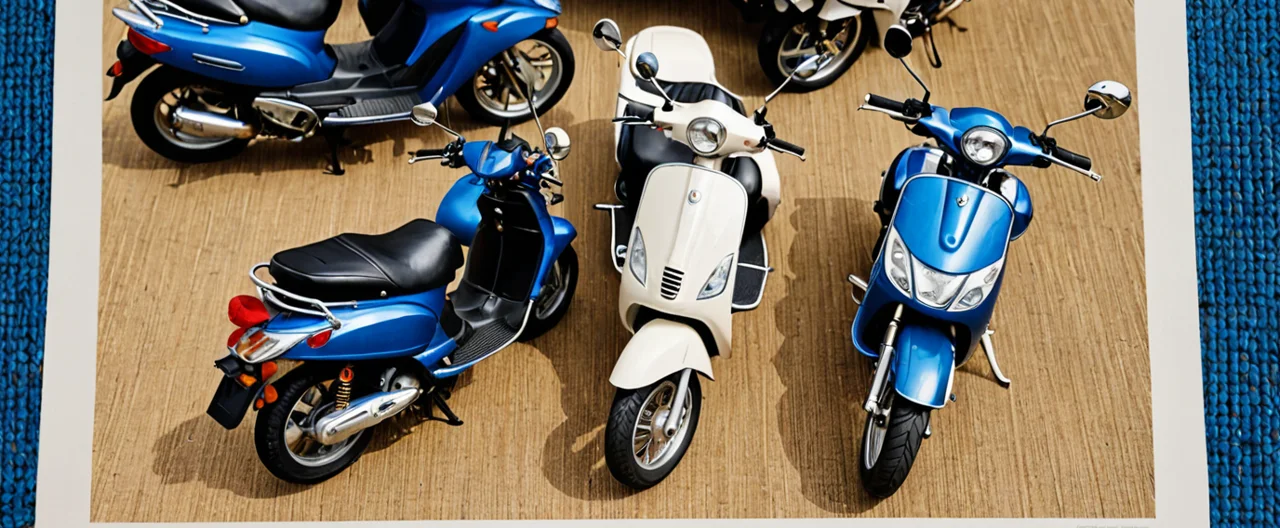
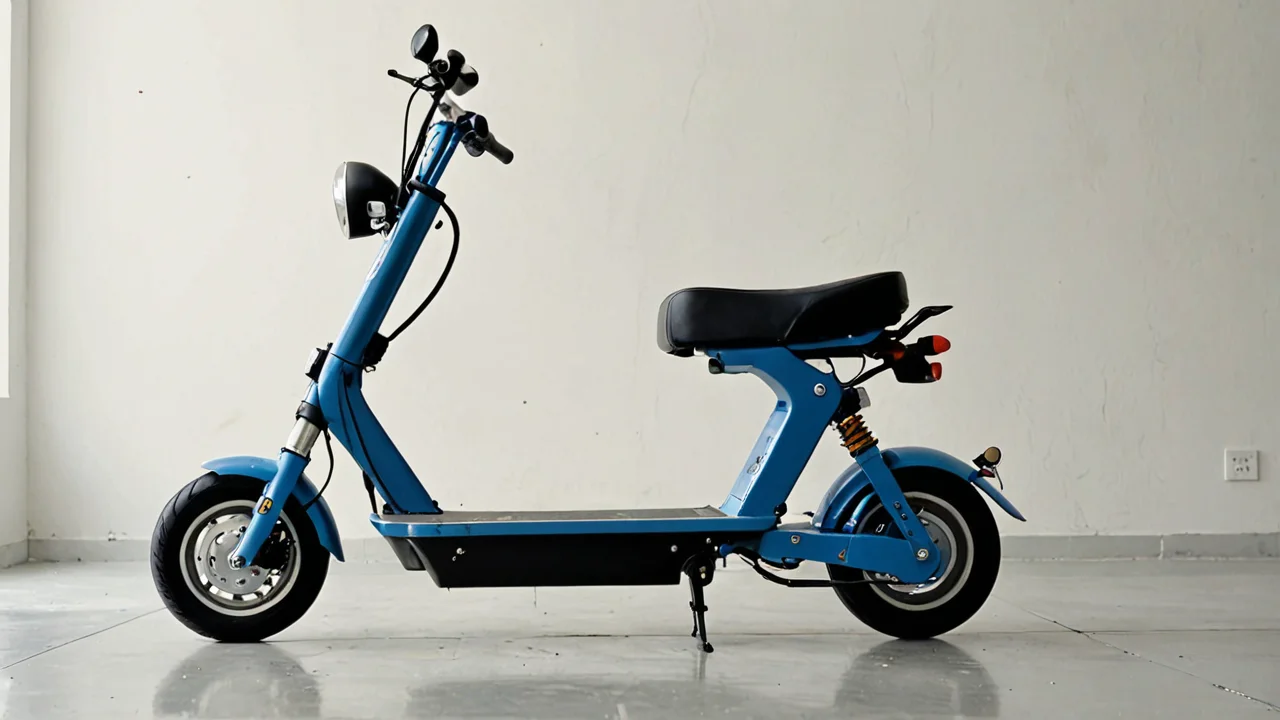
A seated electric scooter or moped-style machine gives you a seat, a step-through frame, and often a throttle, which is what most people picture when they say "scooter." Many of these are legally motor vehicles rather than bicycles, which means licensing, registration, and insurance in many states. Check the classification before you fall in love with the styling. A machine that looks like a Vespa and is titled as a motorcycle is a different ownership proposition than a Class 2 e-bike that happens to have a step-through frame.
A gas scooter is the choice when range and refueling matter more than noise, maintenance, and emissions rules. It has no battery to charge, no range anxiety, and a fuel system any small-engine shop can service. It also has a engine that needs oil changes, a carburetor that dislikes ethanol fuel and long storage, and emissions equipment that varies by jurisdiction. If you ride daily and far, gas is simple. If you ride short trips and can charge at home or at work, electric is simpler and cheaper per mile, and you avoid the small-engine maintenance that quietly eats the savings on a cheap gas scooter.
The trade-off nobody mentions: electric machines depreciate faster and their batteries age whether you ride them or not. A gas scooter holds value on a different curve and is easier to sell to a non-enthusiast. Neither is wrong; they are different ownership models.
Fit, weight, and the geometry that decides whether you keep riding
Fit beats specs. A scooter you cannot flat-foot at a stop, or that puts your knees into the bars, will sit in the garage no matter how good the battery is. Sit on the machine, put both feet down, and check that you can hold it up with one hand while it is stationary. If you cannot, it is too heavy for you in the situations that matter, which are parking lots, driveways, and crowned roads.
Seat height and floorboard length matter more than most buyers expect. A step-through frame with a long, flat floorboard lets you shift your feet and carry a bag between your knees. A short floorboard forces your feet forward and puts weight on your tailbone. Reach to the bars should leave your elbows slightly bent; if you are locked straight, the bars are too far and your wrists will complain within a few miles.
Wheel size is the other big variable. Larger wheels roll over potholes and expansion joints with less drama and are more stable at speed. Smaller wheels fold more compactly and turn tighter, which is why they dominate the stand-up category. The cost of small wheels is a harsher ride and less margin when you hit something you did not see. If your roads are bad, buy the larger wheel and accept the extra weight and folded size.
Weight cuts both ways. A heavier machine is more stable at speed and less likely to be blown around by a passing truck, but it is harder to lift onto a rack, harder to walk up a ramp, and harder to recover if it tips. Check the weight against your actual strength, not your optimism. And check the load rating against what you actually carry; a rider plus a loaded top case plus a backpack adds up faster than people plan for.
Range, charging, and the battery chemistry you are actually buying
Published range is a best case, measured with a light rider, flat ground, moderate temperature, and a fresh battery. Real range drops with cold, hills, headwinds, and weight. Treat the advertised number as a ceiling, not an expectation, and plan your regular trip against roughly half of it until you have measured your own.
Charging is the constraint most buyers underestimate. A removable battery that you can carry inside and charge at a desk changes the ownership experience completely, because you are no longer dependent on a garage outlet or a long extension cord. A built-in battery forces you to park near power and to think about theft. If you live in an apartment, removable is close to mandatory.
Battery chemistry matters less than the quality of the cells and the battery management system, and you cannot judge that from a spec sheet. What you can judge: whether the pack is removable, whether the charger is a reputable brand, whether the manufacturer publishes a replacement battery price, and whether replacement packs are actually in stock. A machine with a proprietary pack and no replacement path is a disposable machine with a limited life, no matter how good it rides. Ask what a replacement battery costs before you buy. If the seller cannot tell you, that is the answer.
The trade-off: bigger batteries add range and weight and cost, and they age on the shelf as well as on the road. Buy for your regular trip plus a margin, not for the longest trip you might take once a year. For the once-a-year trip, rent.
Brakes, tires, and the safety gear that is not optional
Brakes are the spec that separates a toy from a vehicle. Look for two independent brakes, front and rear, and prefer disc brakes over rim brakes on anything heavier than a bicycle. A single brake, or a rear-only brake, is a red flag on a machine that can exceed the speed of a brisk run. Test the brakes at low speed before you ride in traffic, and test them wet, because wet rim brakes lose a noticeable amount of bite.
Tires are the next failure point. Small tires on cheap scooters are often rated for lower speeds than the machine can reach, and they wear quickly. Check the sidewall for a speed and load rating and check that replacements are available in the size. A machine with an odd tire size is a machine you cannot keep on the road once the original set wears out.
Helmets are where the law and common sense diverge. Many states require a helmet for Class 3 riders and for younger riders on other classes, and the requirements vary. Buy a helmet certified to FMVSS No. 218, the federal motorcycle helmet standard at 571.218, if your machine is capable of motorcycle speeds or if you ride in traffic. A bicycle helmet is designed for a different impact profile and a different speed. The cost of a proper helmet is small against the cost of a head injury, and the fit matters as much as the certification; a loose helmet rotates off in a crash.
Gloves, eye protection, and closed shoes are the rest of the kit. A scooter crash at low speed still puts your hands out, and road rash on palms takes weeks to heal. The trade-off is convenience: gloves and a full helmet make a short trip feel like a production. The compromise most riders land on is a certified helmet, gloves, and glasses for every trip, and a heavier jacket only for faster roads.
Buying new, used, or direct-to-consumer, and what each path costs
Buy new from a local shop if you want service, warranty support, and a test ride, and accept that you will pay more than the online price. The premium buys you assembly, a relationship, and someone to call when the controller faults. For a first machine, that is often worth it.
Buy used if you can inspect the battery and the brakes, and accept that you are buying someone else's maintenance decisions. Ask how the battery was stored, whether it was kept charged, and how many charge cycles it has seen. Check the brakes, the tires, and the frame welds. Ride it before you pay. A used machine with a tired battery is a used machine plus the cost of a replacement pack, so price it that way.
Buy direct-to-consumer if you are comfortable assembling and adjusting a machine yourself, and accept that warranty service may mean shipping a heavy box. The savings are real, but so is the risk that a small fault becomes a large hassle. Read the return policy before you order, and check whether the machine arrives with the class and speed configuration you expect, because a machine that arrives set up faster than the legal limit is your problem to fix.
Whatever the path, confirm the classification in writing, confirm the replacement battery price and availability, and confirm the brake and tire specifications. Those three facts predict how the ownership goes more than any review. The rest is preference, and preference is the part you can change later.